2026-03-16
The E‑MAR project, jointly run by the Municipality of Norrköping, the Port of Norrköping and the Port of Södertälje, has been granted funding by CINEA through the EU’s Alternative Fuels Infrastructure Facility (AFIF). The decision means that the EU considers the project to be one of the most important in Europe for accelerating the transition to zero‑emission transport.
In total, the E‑MAR project involves investments of approximately 10 million euros, corresponding to around 108 million SEK, of which roughly 3 million euros (about 32 million SEK) may be co‑financed by the EU. These efforts mean that both Norrköping and Södertälje are taking a major step toward increasingly electric, quieter, and lower‑emission port operations.
In the Port of Norrköping, the E‑MAR project means that shore power connections will be installed. This enables vessels to turn off their diesel engines while at berth, thereby reducing emissions in an area close to the city. The port’s electrical grid will also undergo major reinforcement with a new transformer station. In addition, a new solar power facility will be built to supply green electricity to port operations and help reduce both climate impact and energy costs.
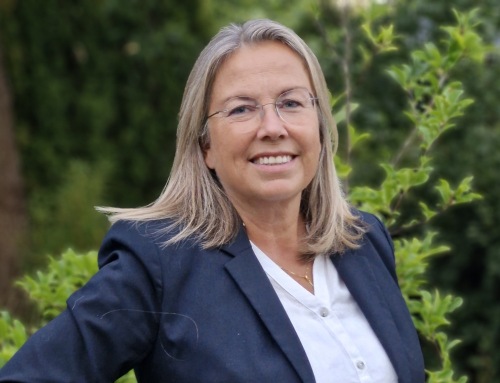
“Receiving EU funding is fantastic news and a strong confirmation of the quality of our application. This is the result of close and determined collaboration between the Port of Norrköping, the Port of Södertälje and the Municipality of Norrköping. We would like to extend a big thank‑you to everyone who contributed! Together, we are taking an important step toward more electrified and sustainable port operations,” says Ewelina Traskowska‑Lundén, Project Manager at the Port of Norrköping.
In the Port of Södertälje, the project means that shore power will be installed in the South Port for RoRo vessels, enabling ships to shut down their auxiliary engines at berth and use clean electricity instead. An electric reachstacker with its own charging station will also be installed, and the electrical grid will be expanded and reinforced to handle higher power loads. In addition, a 1 MWh battery storage system will be added in the Energy Port and connected to the port’s solar installations. Together, these measures allow the port to reduce both emissions and power peaks, while making energy use smarter and operations quieter and more sustainable.
“The EU’s decision to support E‑MAR is an important confirmation that our electrification journey is right on track. With shore power, electric machinery and smart energy storage, we are taking major steps toward a quieter, cleaner and more competitive port. This not only strengthens our sustainability efforts – it also creates opportunities for the entire region to grow,” says Måns Frostell, CEO of the Port of Södertälje.
Once all measures are in place, vessels at berth will be able to connect to electricity, more heavy cargo equipment will be electrically powered, and energy in both ports will be produced and used more efficiently. This will reduce emissions of carbon dioxide, nitrogen oxides and particulates, improving air quality in both cities. At the same time, noise levels decrease, the working environment improves and the ports strengthen their competitiveness as more shipping lines and transport chains demand fossil‑free solutions.
Electrification also brings long‑term economic benefits: more stable energy supply, lower operating costs and infrastructure that is ready for upcoming EU requirements for shore power for vessels at berth from 2030. When E‑MAR is fully implemented, both ports will have taken an important step toward becoming future‑ready, sustainable hubs in Swedish and European logistics.
The Municipality of Norrköping will act as the project coordinator.